

Best Yarn for Crochet Beginners by Fiber and Weight
A yarn aisle can make a first crochet project feel harder than it is. There are soft skeins, bright colors, numbered weights, and fiber names that don't explain what will feel good on your hook.
For most people, the default choice is smooth, light-colored acrylic yarn in a medium weight. It's affordable, easy to wash, and clear enough to help you see every loop. Once you know the basics, fiber and weight can match the project you want to make.
Key Takeaways
- Start with smooth, solid, light- or medium-colored acrylic yarn for clear stitch visibility.
- Choose DK, worsted, or aran yarn for an easy balance of control and speed.
- Use cotton yarn when clear stitch definition matters, and choose wool yarn, such as merino, for soft, warm wearables.
- Check the yarn label for fiber content, weight, hook size, yardage, care, and dye lot.
- Make a small swatch before committing to a garment or any project where size matters.
Best Beginner Yarn Choices by Fiber and Weight
The simplest starting combination is smooth acrylic yarn in weight 4, paired with the crochet hook size suggested on its label, often around 5 mm or 5.5 mm. This manageable yarn weight is thick enough to see without feeling oversized in your hands. It also holds up well when you pull out a row and try again.
Acrylic yarn comes in a wide range of colors and is usually inexpensive, so practice doesn't feel wasteful. Many yarn brands offer it in colors and weights for scarves, hats, blankets, granny squares, and other first projects. The Crochet.com guide to choosing yarn also notes that synthetic fibers are easy to find in many colors and weights.
DK, worsted weight yarn, and aran offer a comfortable middle ground. Bulky yarn is also easy to see and works up fast, especially for a scarf. Still, the right yarn depends on the project, your budget, and what feels comfortable in your hands.
 Why Smooth Acrylic Yarn Is the Best First Yarn for Many Beginners
Smooth acrylic yarn is forgiving. You can undo stitches without damaging it, and it has enough give to make learning tension control less tiring. It is also a practical washable yarn for gifts and everyday blankets.
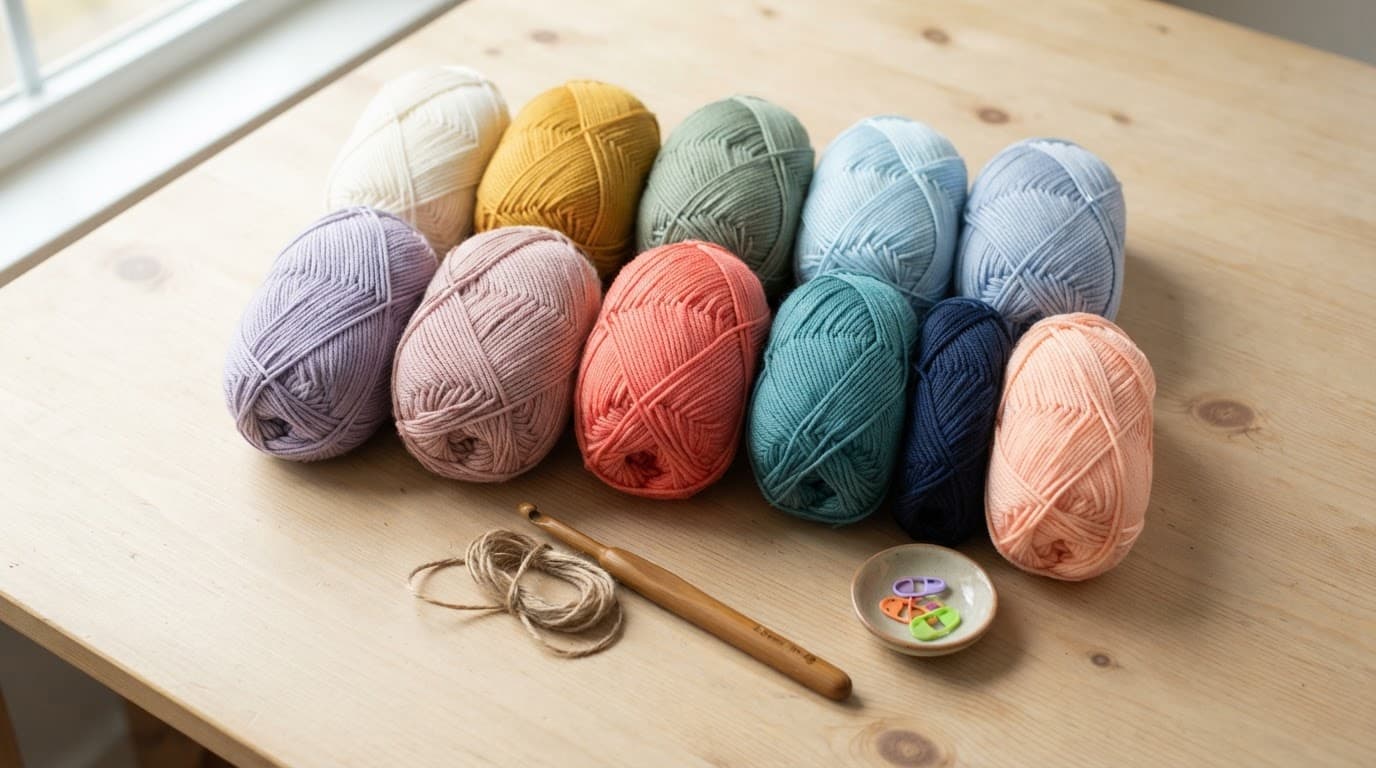
Choose a solid color yarn in cream, pale blue, soft pink, or medium gray. These shades improve stitch definition, making top loops, turning chains, and skipped stitches easier to see than with black or navy yarn.
Skip fuzzy mohair, eyelash yarn, boucle, chenille, and other textured yarns for now. These materials can hide stitch placement. A loosely spun single ply yarn can also fray or catch more easily, though not every single-ply yarn causes problems.
A clear view of each loop matters more than choosing the prettiest color for your first skein.
When Merino, Cotton, or a Blend Makes More Sense
Merino wool and cotton are natural fibers with distinct strengths. Wool yarn feels soft and warm, so it suits hats, scarves, and cozy garments. However, it costs more than acrylic and may need gentle washing.
Cotton yarn gives crisp stitch definition and holds its shape well, making it a strong choice for dishcloths, baskets, bags, and placemats. It has less spring than acrylic or wool, so tight stitches can tire your hands sooner.
A cotton-acrylic blend often combines the structure of cotton yarn with more softness and easier care. A good beginner yarn can also be a blend when the project calls for it. Pick the finished item's job first, then choose the fiber that suits it.

How Yarn Fiber Changes the Feel and Performance of a Crochet Project
Fiber affects more than softness. It changes how a yarn weight behaves, including stretch, warmth, drape, and yarn elasticity. A bright or variegated yarn may catch your eye while obscuring stitches.
Acrylic, wool, cotton, and blends cover many common synthetic fibers and natural fibers used in crochet. Use this quick comparison when choosing a first project:
| Fiber | Best for | Beginner advantage | Watch for |
|---|---|---|---|
| Acrylic yarn | Blankets, scarves, practice | Affordable, washable, forgiving | Can feel less breathable |
| Wool yarn or merino | Hats, winter wear | Warm, soft, elastic | Often needs gentle care |
| Cotton yarn | Bags, dishcloths, baskets | Clear stitch definition | Less stretch can strain hands |
| Bamboo or plant blends | Shawls, light garments | Soft drape and cool feel | May split or stretch |
| Blends | Everyday wearables | Balances softness and strength | Read care details carefully |
Yarn quality also varies by twist, yarn plies, and finish. Depending on its twist, a single ply yarn may feel soft or prove more delicate. Before buying wool, consider allergies and the fiber content, especially with natural fibers. Check care instructions before making a baby item, kitchen project, or gift that will need frequent washing.
Choose Fibers for Wearables, Blankets, Bags, and Home Decor
Acrylic yarn and washable blends work well for blankets because they are durable and simple to care for. For winter hats and scarves, merino or a wool blend adds warmth and softness.
Cotton yarn is especially useful for structured crochet. A market bag, coaster, basket, or dishcloth benefits from its firm fabric. For a lighter shawl or tunic, choose a softer yarn with drape, such as a bamboo blend or smooth cotton blend.
A simple beginner crochet scarf guide is a practical place to try weight 4 acrylic. It uses a forgiving yarn category for a cozy project that builds confidence without complicated shaping.
Fiber Pros and Cons Beginners Should Know Before Buying
No fiber is perfect for every purpose. Acrylic is usually the easiest choice for practice, while cotton yarn gives crisp stitches and strong stitch definition for firmer fabric. Compared with acrylic's give, cotton has less flexibility. Wool offers pleasant stretch, but its care needs can make it less convenient for daily-use items.
If a skein feels scratchy or hard to pull from the center, put it back. The yarn should move through your fingers without catching. A single ply yarn may also need extra care, so consider its twist and durability. A good first yarn makes you want to keep going after a missed stitch.

Which Yarn Weight Is Easiest to Crochet With?
Yarn weight means thickness, not how much the skein weighs on a scale. The common Craft Yarn Council system runs from lace weight 0 through jumbo weight 7, although names can differ by country and brand.
For most learners, yarn weight 3, 4, and 5 are the friendliest choices: dk weight yarn, worsted weight yarn, and bulky weight. Weight 4 is the strongest all-purpose recommendation because it makes visible, manageable stitches. A beginner crochet yarn weight overview also identifies weights 4 and 5 as accessible options for new crocheters.
Best Beginner Weights, From DK to Bulky
DK weight yarn is lighter than worsted and works well for garments, accessories, and smaller projects. This yarn weight creates less bulky fabric, although you may need more stitches than with worsted.
Worsted and aran yarns are dependable for hats, scarves, blankets, and practice swatches. Worsted weight yarn labels often pair with hooks between 4.5 mm and 6.5 mm. Follow the label first, then adjust only if your fabric looks too loose or too tight.
Why Lace, Fingering, Sport, and Bulky Weight Yarn Can Be Harder
Bulky weight makes each stitch large and easy to see. It is useful for a quick scarf or throw. However, it can create stiff fabric and uses up yardage quickly.

Lace and fingering yarn need small hooks and steadier tension. A dropped stitch can be difficult to find, especially when you are still learning where the hook goes.
Sport and baby yarn are manageable after some practice, yet their smaller loops are harder to see than medium yarn. Sport or baby-weight wool can be especially challenging to see. Jumbo yarn has the opposite problem. It is highly visible but can feel awkward to hold and may be expensive for a larger project.
These weights are not off-limits. Choose a yarn weight that matches your comfort level and the project you want to make.
Use the Yarn Label to Match Fiber, Weight, and Hook Size
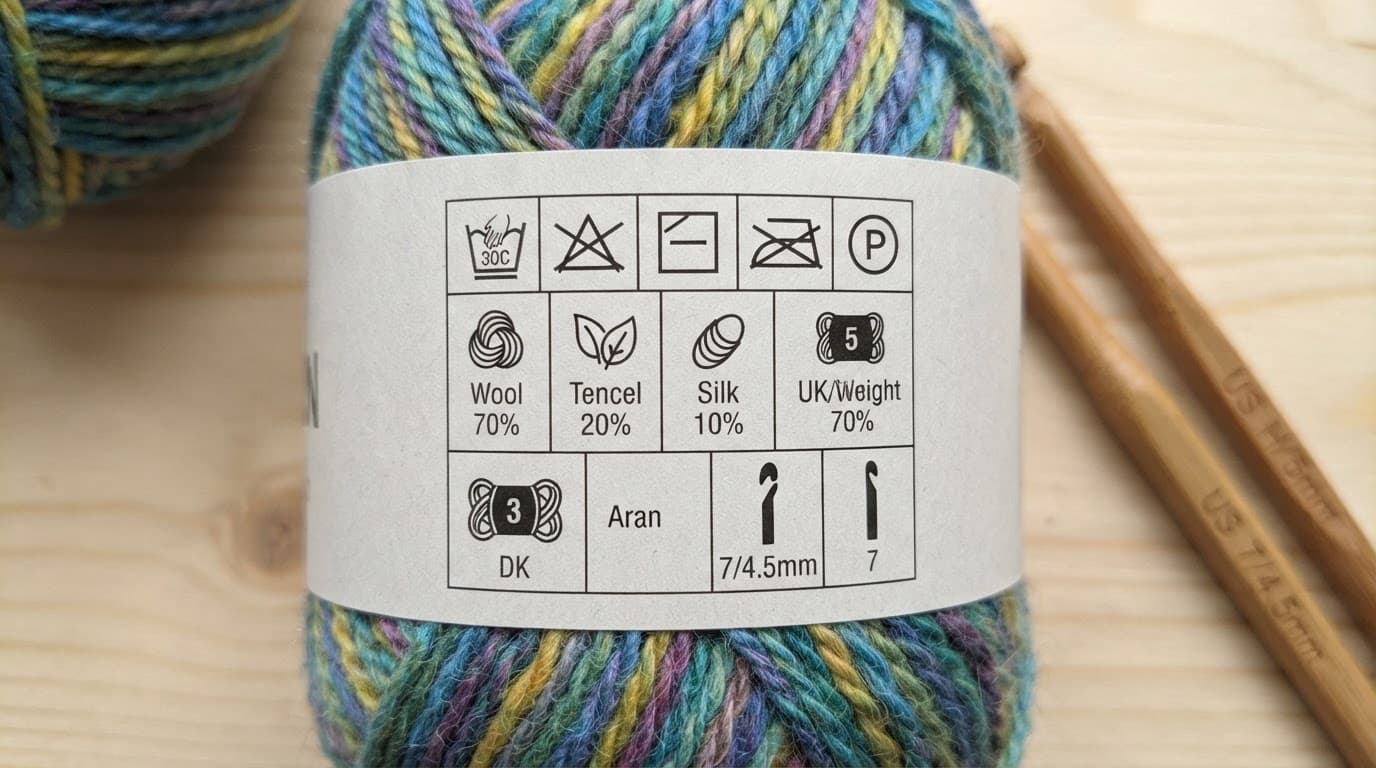
A yarn label gives you information that color cannot. Check the fiber content, weight symbol, suggested crochet hook size, yardage, care symbols, and dye lot number.
Two skeins can weigh the same but contain very different lengths. Their fiber content can also affect how they feel, stretch, and behave. More yards per 100 grams often means a finer yarn. When a pattern gives a yardage estimate, use that number rather than guessing from skein count alone.
 Match the Yarn to the Pattern Instead of Guessing
A pattern's yarn recommendation is a useful starting point. Changing the fiber or yarn weight can change the size, drape, texture, and amount of yarn needed.
For your first project, stay close to the listed weight and choose a similar fiber, such as acrylic yarn. Substitutions from different yarn brands can vary in yardage, gauge, and drape. Check the yarn plies, too. A single ply yarn may split more easily and produce less visible stitches.
Make a small gauge swatch if size matters. This is especially important for garments, including a relaxed, adjustable piece like the Y Knot a Tunic pattern.
Pick a Beginner-Friendly Color and Texture
Choose a solid color yarn with a smooth surface. Light and medium colors provide better stitch definition, making stitches easier to count and mistakes easier to fix.

Save black, dark navy, olive, highly color-changing variegated yarn, chenille, boucle, eyelash yarn, and other textured yarns for later. Their texture can look beautiful in a finished project, but it often hides the exact spot where your hook belongs.
Avoid Common Beginner Yarn Mistakes and Choose With Confidence
Crochet beginners should buy enough yarn in the same yarn weight before starting. Check that every skein has the same dye lot, since color can vary across production runs and yarn brands.
Also, match the yarn to its future use. Washable yarn, such as easy-care acrylic, suits a busy household better than hand-wash merino, while stiff cotton may not give a soft scarf the drape you want.
Start with light-colored acrylic yarn and the label's hook size. Crochet a small swatch to practice even loops and tension control, then undo it and try again. Once the yarn feels easy to handle, move on to a simple project.
Start With Yarn You Can See and Enjoy
Begin with smooth, light-colored medium-weight yarn, usually DK, worsted, or aran, and use the hook size on the label or pattern. Acrylic yarn is the easy default, while cotton yarn, merino, and blends suit different finished projects; choose a solid color yarn in this medium yarn weight.
Make a small swatch without pressure, noting that bulky weight shows stitches quickly; save variegated yarn until stitch placement feels familiar. When the loops are easy to see and the yarn moves comfortably through your hands, you are ready for a simple beginner crochet project.
Frequently Asked Questions
What should crochet beginners buy for a first project?
Smooth acrylic is usually easier for a first project because it is flexible, affordable, and washable. Choose cotton when you want a firm fabric, crisp stitch definition, or heat resistance for items such as dishcloths.
What yarn weight should a complete beginner buy?
DK, worsted, and aran are safe starting weights. Weight 4 worsted is widely available and works for many patterns, while bulky yarn is useful for fast practice when the pattern calls for it.
What color yarn is easiest to crochet with?
A solid light or medium color is easiest to see. Pale yellow, light blue, cream, and medium gray make stitch loops easier to count than dark, fuzzy, or variegated yarn.
Can I use a different yarn from the one listed in a pattern?
Yes, if the replacement has similar weight, fiber behavior, yardage, and care needs. Make a gauge swatch first, especially for clothing, because similar yarns can create different-sized fabric.
How much yarn should I buy for a beginner project?
Use the pattern's total yardage estimate. Buy a little extra when possible, keep your receipt, and match dye lots if the project needs more than one skein.
Should beginners buy expensive yarn?
You don't need luxury yarn to learn successfully. A dependable, smooth yarn is better for practice, while a small amount of merino or other wool yarn can make a special project feel worth the added cost.

Christa Patel is the maker and voice behind Secret Yarnery. She shares crochet tutorials, free patterns, and practical guidance to help makers build their skills with confidence. Her beginner-friendly teaching style makes topics like choosing yarn, reading labels, and finding the right hook feel clear and manageable.
About the Author

With a passion for crafting easy, beginner-friendly tutorials and patterns, Christa inspires crafters of all skill levels to unleash their creativity worldwide. She encourages yarn lovers to connect, create, and crochet a world filled with beautiful handmade treasures!
Best Yarn for Crochet Beginners: Fiber & Weight Guide 2026


