

Crochet Yarn Weight Guide With Hook Size Recommendations
DK, worsted, bulky, and jumbo can sound like a secret language at the yarn shelf. Yet yarn weight only describes thickness, while your hook size changes stitch size, fabric density, drape, and finished measurements.
This crochet yarn weight guide with hook size recommendations gives you a practical starting point for choosing both. Use the chart to compare crochet hook sizes in US and metric measurements. Treat yarn weight as a starting point, then let your tension and gauge swatch make the final call.
Key Takeaways
- Yarn weight numbers run from 0 Lace to 7 Jumbo, from finest to thickest.
- The crochet hook sizes listed on a yarn label are starting points, not fixed rules.
- Smaller hooks create firm, dense fabric; larger hooks create softer fabric with more drape.
- Match gauge for garments, hats, and fitted projects before committing to the full piece.
- Compare metric hook sizes carefully, because US letter names can vary.
Crochet Yarn Weight Guide With Hook Size Recommendations
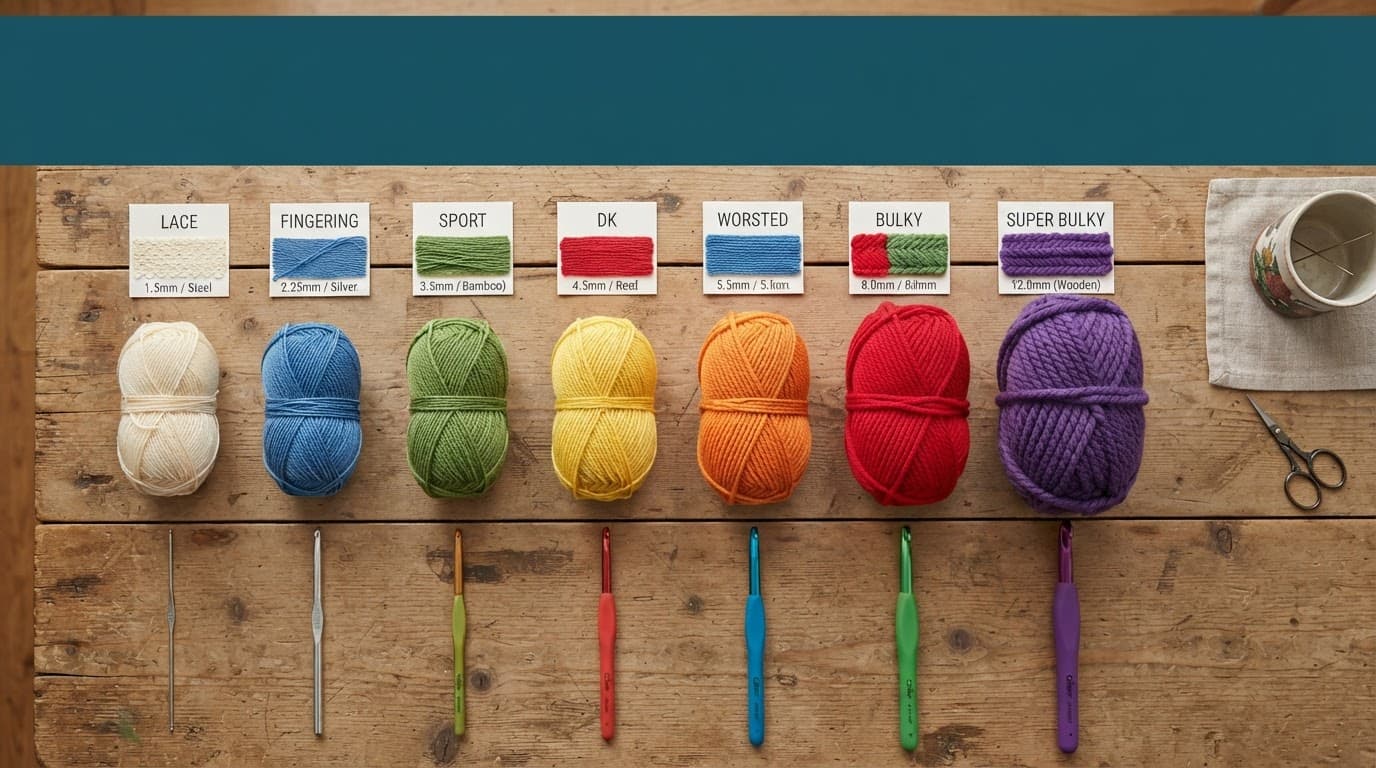
The Craft Yarn Council groups yarn into eight numbered categories, 0 through 7. Its standard yarn weight system gives crocheters a shared reference, even when brands use different names.
The chart below works as both a crochet hook size chart and a yarn weight chart. Use it as a starting point when choosing crochet hook sizes.
Treat every range below as a starting point. Your tension, stitch pattern, fiber, and project purpose can all move the best hook size up or down.
| Yarn weight | Common name | Suggested hook size | Approximate metric range | Good project choices |
|---|---|---|---|---|
| 0 | Lace weight | Steel crochet hooks or fine regular hooks | 1.5 to 2.25 mm | Doilies, fine shawls, thread work |
| 1 | Super Fine, fingering yarn | B-1 to E-4 | 2.25 to 3.5 mm | Socks, baby items, light garments |
| 2 | Fine, sport yarn | D-3 to 7 | 3.25 to 4.5 mm | Lightweight sweaters, shawls |
| 3 | Light, DK (double knitting) | G-6 to I-9 | 4 to 5.5 mm | Baby blankets, cardigans, scarves |
| 4 | Medium, worsted weight, aran weight | H-8 to K-10 1/2 | 5 to 6.5 mm | Hats, blankets, amigurumi, sweaters |
| 5 | Bulky, chunky yarn | K-10 1/2 to M/N-13 | 6.5 to 9 mm | Chunky hats, cowls, quick blankets |
| 6 | Super bulky | M/N-13 and larger | 9 to 12 mm+ | Heavy throws, oversized scarves |
| 7 | Jumbo yarn | Large specialty hooks | 12 mm+ | Rugs, baskets, thick throws |
For worsted yarn, a 5 mm hook, also called US H-8, is a common first choice. DK, bulky, and larger categories vary more than many beginners expect. Check both the pattern and the yarn band before you begin.
What the Yarn Weight Numbers and Names Actually Mean
A category number is a general classification, while names such as DK or Aran are common shorthand. Fingering usually falls under Super Fine, DK is usually Light, and worsted or Aran is usually Medium.
Ply is not the same as thickness. A yarn made with several thin strands can still be fine, while a single thick strand can be bulky. If the yarn band is missing, use wraps per inch guidance as a backup. Wrap the yarn gently around a ruler, count the wraps in one inch, and avoid pulling it tight.
Choose Yarn Weight Based on the Project You Want to Make
Lace yarn suits delicate doilies and airy shawls. Fingering works well for socks and baby garments, while sport yarn gives lightweight sweaters a little more body.
DK yarn is a comfortable middle ground for garments and baby blankets. Worsted is popular for hats, scarves, blankets, sweaters, and stuffed toys because stitches show clearly without making the project feel heavy.
Bulky yarn makes fast accessories and cozy blankets. The thickest categories suit rugs and weighty throws, but they can create a stiff fabric if the hook is too small. Choose based on warmth, drape, stitch definition, working time, and how the finished item will be used.
How to Choose a Crochet Hook When the Label Gives a Range
A yarn label might suggest 5 to 6.5 mm, but your pattern may call for one specific size. When choosing among crochet hook sizes, start with the pattern. Then compare its pattern gauge with the gauge listed on the yarn label. The pattern's target fabric matters more than a generic recommendation.
Use a smaller hook for baskets, structured bags, amigurumi, or firm borders. Use a larger hook for shawls, relaxed garments, scarves, and open stitch patterns.
A simple process prevents a lot of frogging:
- Read the pattern's yarn weight, hook size, and gauge.
- Check the yarn label for its suggested hook range.
- Make a gauge swatch in the project's stitch pattern.
- Feel the finished fabric, measure it, then change hooks if needed.
Match Hook Size to the Fabric You Need
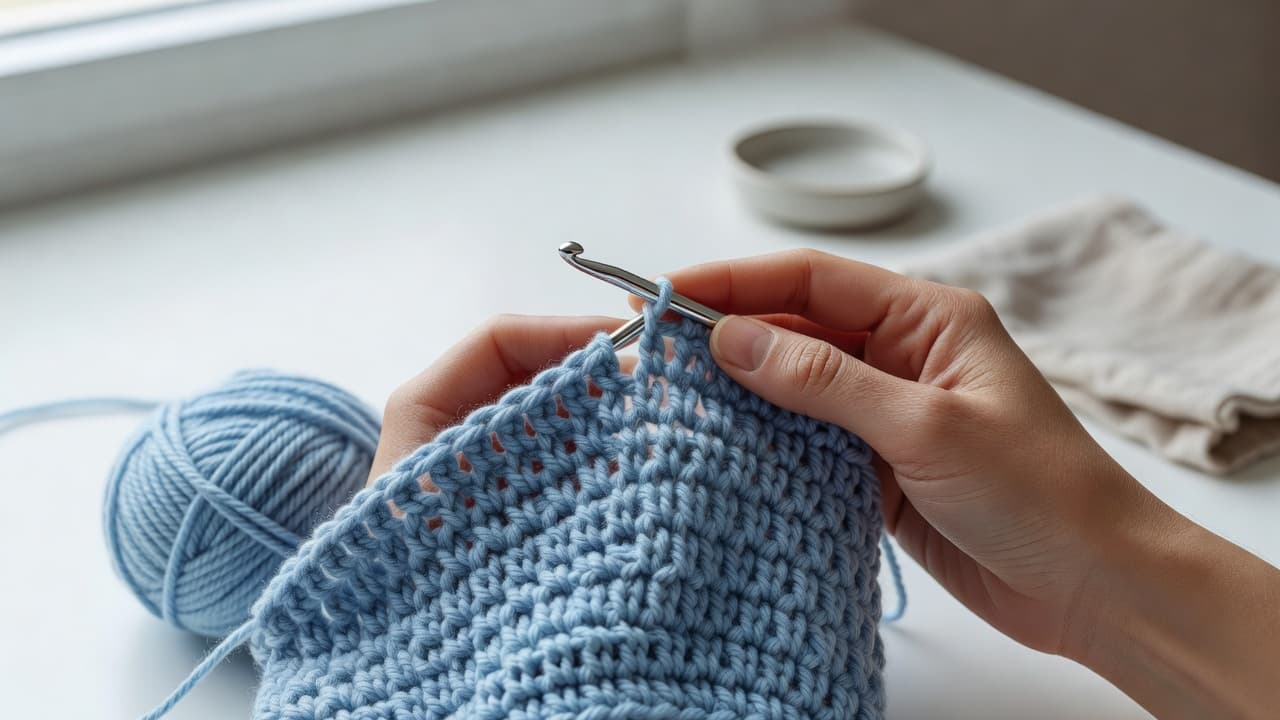
A smaller hook produces tighter stitches and uses less yarn per stitch. That helps a toy hold stuffing or lets a basket stand up, although tight crochet can strain your hands.
A larger hook creates looser stitches, more visible spaces, and a softer drape. That suits a breezy tunic or shawl, but it can leave a bag floppy or show stuffing through stuffed toys.
Your tension also affects the result, so judge the finished fabric by touch as well as appearance.
Fabric feel matters as much as the hook number. A neat swatch that feels wrong will still feel wrong after 50 rows.
Use Gauge to Confirm the Right Hook Size
Crochet a swatch larger than the area you need to measure. Use the same yarn and stitch pattern as the project. If you plan to wash the item, wash or block the swatch first, then let it rest before measuring stitches and rows.
Measure the swatch in the project's stitch pattern, then compare it with the pattern gauge. If your swatch is too small, your stitches are too tight, so try a larger hook. If it is too large, move down one hook size. For a scarf or decorative garland, a small gauge difference may not matter. For fitted sweaters, hats, and custom-size pieces, it matters a great deal.
How to Read Yarn Labels and Compare Hook Sizes
Look beyond the weight symbol when comparing crochet hook sizes. Check the suggested hook range, gauge, fiber composition, yardage or meterage, care instructions, and dye lot on the yarn label. These details help you buy enough yarn and avoid color differences in a large project.
The label's hook suggestion is helpful, but the pattern gauge and desired fabric should take priority. The Craft Yarn Council's crochet hook size chart explains hook size conversion across common metric and US equivalents. A 5 mm metric size corresponds to H-8, while 6.5 mm corresponds to K-10 1/2 in the US size range.
Recognize Common Yarn Names Across Patterns and Stores
Different regions often use familiar names with ply labels. Fingering yarn may be called 4-ply, sport 5-ply, DK 8-ply, worsted weight or Aran 10-ply, and bulky 12-ply.
Those terms are helpful clues, not exact measurements. When choosing a substitute yarn, compare meters per 100 grams, wraps per inch, gauge, and the yarn's actual thickness before substituting.
Adjust for Fiber, Texture, and Yarn Construction
Two medium-weight yarns can crochet very differently. Cotton has less bounce than wool, so it often produces a firmer finished fabric. Acrylic can range from crisp to soft, depending on its construction.
Chenille, boucle, eyelash yarn, and fuzzy yarn can hide stitches and reduce stitch definition. Test a small sample before committing to a large project. Notice whether the yarn splits, stretches, slides easily on the hook, and lets you see each stitch.
Common Hook and Yarn Mistakes, Plus Easy Fixes

Many beginners grab the biggest hook because larger stitches seem faster. However, that choice can make blankets too loose, bags too floppy, and chunky yarn projects unstable.
Don't select a hook only because it appears on the yarn label. Also, don't skip the gauge swatch when fit matters. Change crochet hook sizes one step at a time, count stitches in the first few rows, and test the drape before you continue.
Mixing yarns with different thicknesses can create uneven stripes or a misshapen blanket. If you combine colors, compare each yarn's weight, yardage, and gauge first.
When to Change the Hook and When to Change the Yarn
Change the hook when the yarn feels right but the fabric or gauge is wrong. Change the yarn when you need different warmth, stretch, texture, thickness, or stitch definition.
Switching yarn weight can change yardage, finished size, and stitch counts. It may also require pattern adjustments, especially in garments. Check the pattern gauge for both stitch and row measurements before substituting yarn.
Build a Small Hook Set for Flexible Crochet Projects
A beginner-friendly hook set can start with 3.5 mm, 4 mm, 5 mm, 5.5 mm, 6 mm, and 8 mm. Those sizes cover many sport yarn, DK, bulky, and other common projects.
Add steel crochet hooks for thread work and larger hooks for super bulky yarn later. Ergonomic handles can make long crochet sessions easier, and the same hook recommendations work for right-handed and left-handed crocheters.
Choose the Hook That Makes the Right Fabric
Start with the yarn weight, check the label and pattern, and choose from the recommended crochet hook sizes. Then confirm your choice with a swatch and your own hands.
Changing hook size is a normal part of crochet, not a mistake. Save this guide for your next blanket, garment, accessory, or home project.
Frequently Asked Questions
What Crochet Hook Sizes Are Best for Worsted Weight Yarn?
A 5 mm, US H-8, hook is a common starting point for this yarn weight. Medium yarn, often called worsted weight, usually works well with hooks from 5 to 6.5 mm, depending on the stitch pattern and fabric you want.
Can I Use a Different Hook Size Than the Pattern Recommends?
Yes. A different hook can correct gauge, soften fabric, or make stitches firmer. Check the pattern gauge again after changing sizes, especially for fitted garments, because the change can affect width and length.
How Do I Know Which Yarn Weight I Have Without a Label?
Compare it with a known yarn, measure wraps per inch, and check meters per 100 grams if you know the original skein size. Then make small samples with several hooks and assess the fabric’s thickness and appearance.
Why Does My Crochet Fabric Feel Too Stiff?
Your hook may be too small, your grip may be too tight, or the fiber may have limited drape. Try one hook size larger and relax your grip before reworking the entire project.
Do Different Yarn Brands Use the Same Weight Standards?
Many brands use the same numbered categories, but their ranges can still differ. Compare actual gauge, hook range, yardage, and thickness instead of trusting the weight name alone.

Christa Patel , is the creator behind Secret Yarnery, where she shares practical crochet tips, yarn guidance, and project inspiration for crocheters at every skill level. Her tutorials focus on making crochet feel clear, enjoyable, and achievable.
About the Author

With a passion for crafting easy, beginner-friendly tutorials and patterns, Christa inspires crafters of all skill levels to unleash their creativity worldwide. She encourages yarn lovers to connect, create, and crochet a world filled with beautiful handmade treasures!
Crochet Yarn Weight Guide: Hook Sizes for Every Yarn 2026


