

How Much Yarn to Crochet a Blanket? A Simple Yardage Guide
Starting a blanket without enough yarn feels like packing for a trip with no map. How much yarn to crochet a blanket sounds simple, but the answer shifts fast.
Blanket size, yarn weight, stitch choice, and your tension all change the total. The good news is that you don't have to guess. With a few quick averages, plus a small swatch, you can plan your blanket with a lot more confidence.
The biggest factors that change how much yarn a crochet blanket needs
There isn't one fixed answer for every blanket. Two projects can have the same width and length, yet use wildly different yardage. That's because yarn use depends on how much fabric you create, how dense that fabric is, and how tightly you crochet.
Blanket size matters more than most beginners expect
Size drives yarn use more than anything else. A baby blanket might feel manageable with a few skeins, while a bed blanket can eat through a full cart of yarn before you know it.
Common finished sizes often look like this:
- Baby blanket: about 30 x 36 inches
- Stroller blanket: about 30 x 40 inches
- Lap blanket: about 36 x 48 inches
- Throw blanket: about 48 x 60 inches
- Twin blanket: about 66 x 90 inches
- Full blanket: about 80 x 90 inches
- Queen blanket: about 90 x 100 inches
- King blanket: about 108 x 100 inches
As width and length grow, yarn needs rise fast. A throw is not only a little bigger than a lap blanket. It has much more surface area, so the yarn jump is larger than many beginners expect.

Yarn weight changes the total yardage and the number of skeins
Thin yarns, like lace, fingering, and DK, usually need much more total yardage than thicker yarns. On the other hand, bulky and super bulky yarn often need fewer yards to cover the same blanket size.
Still, fewer yards doesn't always mean fewer skeins. A super bulky skein may only hold 80 to 120 yards, while a worsted skein might hold 200 yards or more. So the label matters as much as the yarn weight.

If you're planning a cold-weather throw, these best winter yarns for crochet blankets can help you compare warm, soft options before you buy.
Open stitches use less yarn, dense stitches use more
Stitch pattern changes blanket yardage more than many people realize. Airy designs, like granny-style blankets or chain-heavy lace patterns, often use less yarn because they leave open space.

Dense stitches go the other way. Single crochet, moss stitch, waffle stitch, and heavily textured patterns build thicker fabric, so they usually take more yarn. Post stitches, bobbles, and deep ridges can push yardage up even more.
Quick yardage charts get you close, but the stitch pattern can shift the answer by a lot.
Your crochet tension can raise or lower the final amount
Tension is simply how tight or loose you crochet. Tight crocheters tend to use more yarn because their stitches are more compact. Loose crocheters may use less because the stitches spread out more.
This matters even if you follow the same pattern as someone else. That's why a test swatch helps so much. It shows how your hands, hook, and yarn behave together.
Quick yarn estimates for common crochet blanket sizes
These ranges are practical starting points for average blankets made with common yarn weights and standard stitches. Skein counts will vary, because one brand's skein might hold twice as much yardage as another.
The table below gives easy reference ranges.
| Blanket size | Typical yarn estimate |
|---|---|
| Receiving blanket | 600 to 1,000 yards |
| Stroller blanket | 700 to 1,200 yards |
| Crib blanket | 1,000 to 1,800 yards |
| Lap blanket | 1,200 to 2,000 yards |
| Throw blanket | 1,800 to 3,500 yards |
| Twin blanket | 3,000 to 5,000 yards |
| Full blanket | 3,500 to 5,500 yards |
| Queen blanket | 4,500 to 7,000 yards |
| King blanket | 5,000 to 8,500 yards |
The main takeaway is simple: small blankets stay fairly forgiving, while bed-size blankets need more planning.
Baby and crib blanket yarn estimates
Baby projects are often the easiest place to start. A receiving blanket may only take 600 to 1,000 yards, while a stroller blanket often lands around 700 to 1,200 yards. Crib blankets usually climb to 1,000 to 1,800 yards.
Those numbers shift with stitch choice. A soft granny blanket might stay near the low end. A dense single crochet crib blanket can move closer to the top of the range.
Gift makers should also think about washability. Baby blankets get used hard, so easy-care yarn is usually a smart pick.

Lap and throw blanket yarn estimates
Lapghans and couch throws are common projects because they feel useful without becoming huge. A lap blanket often needs 1,200 to 2,000 yards. A throw usually lands around 1,800 to 3,500 yards.
Worsted weight throws sit in the middle for many crocheters. A simple throw in worsted yarn and a standard stitch might use around 2,200 to 3,000 yards. Add texture, a wide border, or extra length, and the total rises fast.
If your goal is a cozy living room blanket, this is where planning pays off most. A throw is large enough to need real yardage math, but still small enough to stay enjoyable.
Twin, full, queen, and king blanket yarn estimates
Bed blankets are where underbuying gets expensive. A twin may need 3,000 to 5,000 yards, while full and queen blankets often move into the 3,500 to 7,000 yard range. King blankets can reach 8,500 yards or more, especially with dense stitches.
Borders can add a surprising amount, especially wide ribbed borders or layered edging. Drape matters too. If you want the blanket to hang over the mattress sides, buy for that extra fabric from the start.
For large blankets, buying enough from the same dye lot matters a lot more than it does for a small project.
How to calculate exactly how much yarn your blanket will use
Quick estimates are helpful, but a swatch gives the best answer. It turns a rough guess into a project plan you can trust.
Make a test swatch and measure how much yarn it uses
Crochet a swatch in the exact stitch pattern, yarn, and hook size you plan to use. Make it large enough to measure well, usually at least 5 or 6 inches square.
If the blanket will be washed or blocked, treat the swatch the same way first. Then measure the finished swatch width and height.
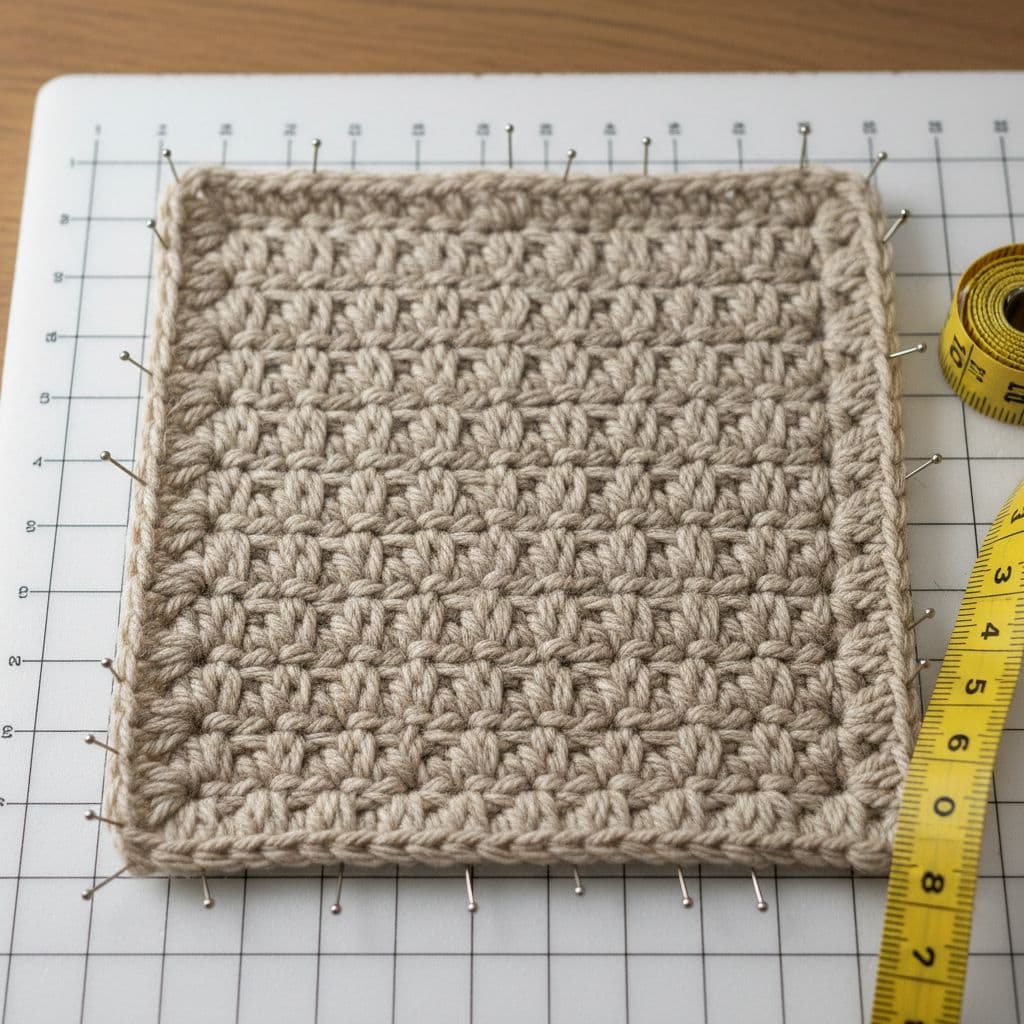
Next, find how much yarn the swatch used. You can do that in two simple ways:
- Weigh the yarn before and after the swatch, if you have a kitchen scale.
- Track the yardage used from the skein, if the label makes that easy.
This step gives you the most accurate estimate because it matches your real stitch density.
Use simple math to scale your swatch to the full blanket size
The easiest method is to compare area. If your swatch is 6 x 6 inches, it covers 36 square inches. If your blanket will be 48 x 60 inches, that blanket covers 2,880 square inches.
Then divide the blanket area by the swatch area:
2,880 / 36 = 80
If the swatch used 22 yards, multiply that by 80:
22 x 80 = 1,760 yards
That gives you a solid working estimate. After that, round up. Yarn is cheaper than project frustration.
Add extra yarn for borders, joining, and mistakes
A buffer matters. For most blankets, adding 10 to 15 percent is a smart safety margin.
Use more than that if your project includes a wide border, patchwork joins, tassels, stripes, or color pooling. Each one can eat more yarn than expected. Stripes also make matching dye lots harder later.
Running short near the end is more than annoying. Even when you find the same color name again, the shade may look slightly different.

Smart tips to avoid running out of yarn halfway through
Planning well at the start saves time, stress, and money later.
Check the skein label for yardage, not just weight
A 100-gram skein doesn't tell you enough on its own. Two skeins can weigh the same and still hold very different yardage.
Always base your math on total yards needed. Then divide by the yards per skein listed on the label. That's how you get a real skein count.
Buy from the same dye lot when you can
A dye lot is the batch of yarn color used in production. Even if the color name matches, one batch may look a bit lighter, darker, warmer, or cooler than another.
For large blankets, buy all your yarn at once when possible. That small habit can save a lot of disappointment.
When in doubt, buy one extra skein
An extra skein is usually the cheaper choice. Tracking down a match later can waste time, and sometimes it doesn't work out.
Leftovers rarely go to waste, anyway. You can use them for a border, a matching pillow, small repairs, or future swatches.
Blanket yarn estimates feel confusing at first because every choice changes the total. Still, the easiest takeaway is clear: quick estimates help, but a swatch gives the best answer.
Use your blanket size, yarn weight, stitch pattern, and a small safety buffer to plan ahead. Once you do that, buying yarn feels less like guesswork and more like a solid start.

FAQS
1. How much yarn do I need to crochet a blanket?
The amount of yarn depends on the blanket size, yarn weight, stitch pattern, and your tension. A small baby blanket may use 600 to 1,800 yards, while a king-size blanket can use 5,000 to 8,500 yards or more.
2. What is the easiest way to estimate blanket yarn?
The easiest way is to make a swatch in the same stitch, yarn, and hook size you plan to use. Measure the swatch, then scale that amount up to the full blanket size.
3. Does thicker yarn use less yarn for a blanket?
Yes, thicker yarn usually uses fewer total yards than thinner yarn. But you may still need several skeins, since bulky yarn often has less yardage per skein.
4. Why do two crochet blankets of the same size use different amounts of yarn?
They can use different amounts because of stitch pattern, yarn weight, and tension. Dense stitches and tight tension usually use more yarn than open, airy stitches.
5. How many skeins do I need for a crochet throw blanket?
That depends on the yardage per skein. A throw blanket often needs around 1,800 to 3,500 yards total, so you may need anywhere from 5 to 15 skeins depending on the yarn.
6. Should I buy extra yarn for a blanket?
Yes, it is smart to buy a little extra. A 10 to 15 percent buffer helps cover borders, mistakes, and small changes in tension.
7. What happens if I run out of yarn in the middle of a blanket?
You may have trouble matching the same dye lot later. The color can vary slightly, even if the yarn name is the same, so it is better to buy enough at the start.
8. Is a swatch really necessary for blanket planning?
It is not always required, but it is the best way to get an accurate estimate. A swatch shows how your yarn, hook, and stitch work together before you start the full project.

Christa Patel is the creator behind Secret Yarnery, she helps crocheters make better project decisions with simple, practical advice. She focuses on yarn planning, blanket sizing, stitch choices, and the small details that help prevent running out of yarn halfway through a project. Her goal is to make crochet feel easier, clearer, and more confident for beginners and experienced makers alike.
About the Author

With a passion for crafting easy, beginner-friendly tutorials and patterns, Christa inspires crafters of all skill levels to unleash their creativity worldwide. She encourages yarn lovers to connect, create, and crochet a world filled with beautiful handmade treasures!
How Much Yarn to Crochet a Blanket? Easy Yardage Guide


