

How to Plan Your Crochet Projects for Weekly Progress
A crowded yarn stash, unfinished blankets, and several works in progress can feel exciting at first. Over time, though, they may start to feel heavy.
Consistent progress doesn't require hours of crochet every day. It does need a realistic plan. When you plan your crochet projects, each one has a clear place in your week. A crochet journal can turn vague crafting goals into a few visible actions. Small milestones, short sessions, and a quick review can keep blankets, garments, and gifts moving without adding pressure.
Key Takeaways
- Pick one main project and one small backup project to keep your works in progress manageable.
- Turn a large finish line into two-to-four-week milestones, then choose a few tasks for this week.
- Reserve short crochet sessions at times you already relax, such as after dinner or before bed.
- Use a crochet project tracker with notes for yarn details, hook size, modifications, and your next step.
- Review progress weekly, then adjust your plan instead of trying to catch up all at once.
Build a Crochet Plan for Consistent Weekly Progress
A useful crochet plan answers two questions: what are you working on now, and what can you finish this week? “Finish my blanket” is a wish, not a workable task. “Complete 12 C2C rows and join the next color” gives you a visible target.

Start by choosing one main project. This can be a blanket, a custom-fit garment, or handmade gifts with a deadline. Then allow one optional small project for variety. A simple granny square, a quick slipper, or a berry garland can satisfy the urge to start something new without burying your main WIP. Keep both projects together in a tote, basket, or digital WIP organizer.
Break the large project into milestones that take two to four weeks. For a gingham corner-to-corner blanket, one milestone might be finishing the first color block in its colorwork design. This week's tasks could be completing six diagonal rows, winding the next yarn color, and checking the edge and stitch counts.
To plan your crochet projects well, keep a short note for each active WIP in a crochet journal. Include the pattern name, yarn weight and color, hook size, deadline, modifications, and your current row or round. That small record saves far more time than it takes to write.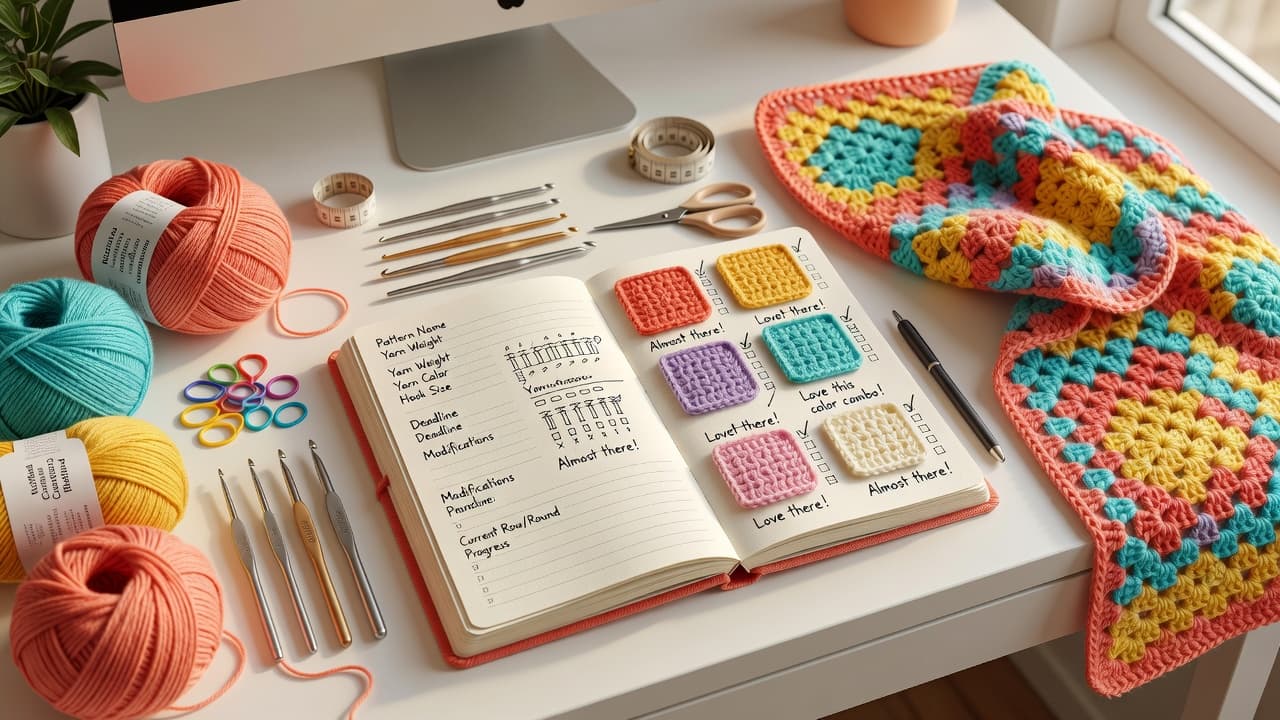
Choose Projects That Match Your Time, Skill, and Energy
Before committing, look beyond the photo. Review the crochet patterns for their skill level, gauge instructions, yarn yardage, number of repeats, and finishing steps. A project with simple rows may suit television time. A garment that needs measuring and shaping deserves a quieter session.
For example, the Y Knot a Tunic style of open, adjustable garment can work well for a patient maker who will measure as they go. A pair of chunky slippers may better fit a tight deadline for handmade gifts, especially when each slipper takes less than an hour.
Match the project to your current energy, not your ideal schedule. When your workweek is full, choose a forgiving pattern with repeated stitches. Realistic planning protects your interest in crochet and keeps a project from becoming a guilt pile.
A project becomes easier to return to when the next task is already chosen before you put the hook down.
Build a Weekly Crochet Schedule You Can Actually Follow
Choose a crochet time that already exists in your routine. Fifteen to 20 minutes after dinner, during a favorite show, or before bed can become a reliable crochet routine.

Give certain days a purpose if that helps you remember. WIP Wednesday can be for your main project. Finish-it Friday can be for weaving in ends, sewing seams, blocking, or adding buttons. Record the schedule and next task in your crochet journal. These small rituals reduce the need to decide what to do every time you sit down.
A realistic week might look like this:
- On Monday, make gauge swatches to confirm the planned yarn amount and prevent late project changes.
- On Tuesday and Thursday, complete a set number of rows or repeats.
- On Friday, weave in ends and update your project note.
Schedule less than you believe you can complete. Crochet estimates often assume uninterrupted time, perfect focus, and no need to frog a row. Add a 20 to 30 percent buffer for busy evenings, yarn tangles, and pattern checks.
If you estimate yarn usage for each session or milestone, you can spot material needs early. Planning around actual free time also makes a deadline easier to judge. Count your available sessions first, then choose the project size that fits them.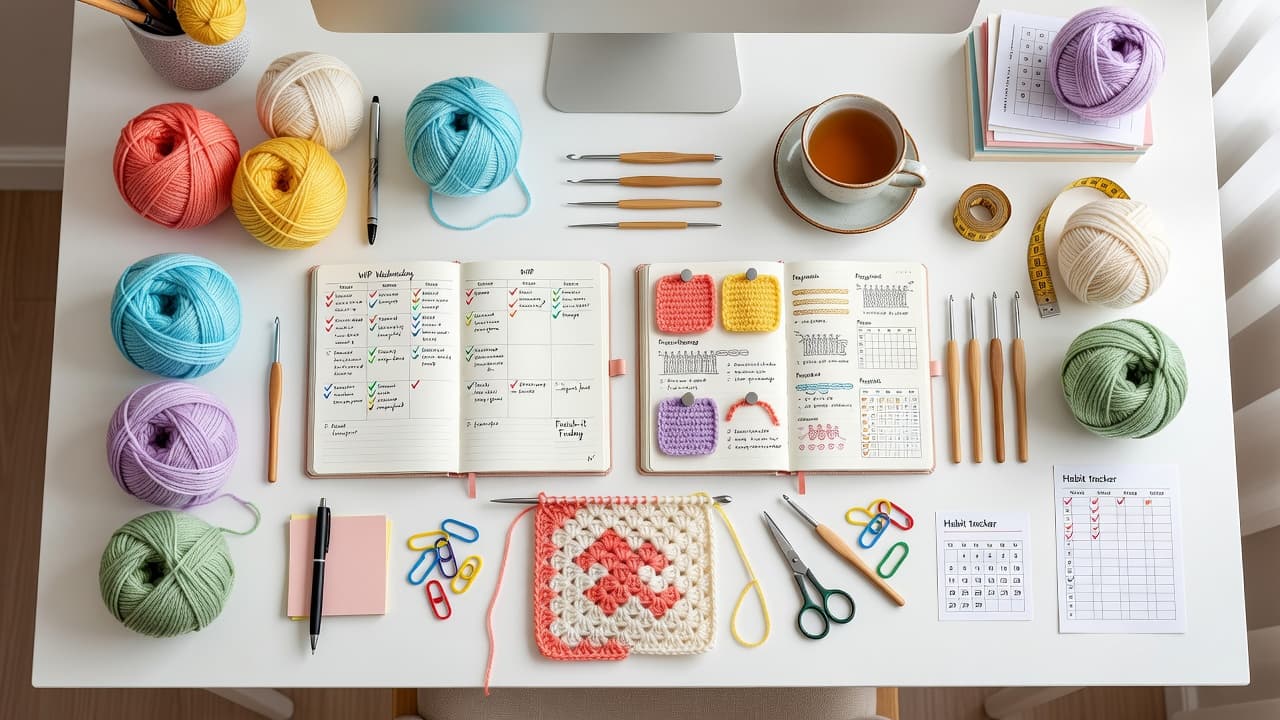
Turn Available Minutes Into Useful Crochet Sessions
A short session still counts. You can complete one repeat, practice a new stitch, check gauge, sort a project bag, or write down a color change. Those jobs prevent small loose ends from stealing time later.
Keep the pattern, crochet hook, yarn, stitch markers, scissors, and tapestry needle together in one basket or tote. Then you can begin quickly instead of searching for supplies or trying to remember which shade came next.
Regular 15-minute sessions often produce more work than waiting for a rare free afternoon. This approach also makes time management easier. A small scrap yarn project helps on days when your main WIP feels too demanding.
Track WIPs, Rows, and Milestones Without Overcomplicating It
Tracking should make crochet easier, not create another task you avoid. A notebook, bullet journal, spreadsheet, crochet journal, crochet project tracker, or phone row counter with digital notes can all work. Choose the format you will genuinely open.
For each active project, record its status as queued, started, frogged, or complete. Add the last completed row or round and one next action. “Round 18 finished, begin decrease section” is enough to remove the restart fog.
Keep your weekly list to three to five meaningful tasks. A concise list shows what matters now and keeps you from mistaking a crowded page for progress. Keep each project’s yarn, tools, and notes together in a WIP organizer. For planning page ideas, browse this DIY crochet project planner, a printable planner with useful project pages.
Set aside five to ten minutes at the end of the week. Ask what you completed, what delayed you, whether the project was enjoyable, and what needs to move. A written record makes it much easier to return after travel, illness, or a busy season.
Use a Project Note That Makes Restarting Easy
Your note can be plain, but it should hold the details your future self will need. A crochet journal can also keep these details organized:
- Project name, recipient, or purpose
- Pattern source and any changes you made
- Yarn brand, color, weight, and hook size
- Gauge, measurements, stitch counts, and current row or round
- The exact next step, such as “weave in ends”
This matters when several projects use similar yarn or when a blanket sits untouched for a few weeks. Rather than examining stitches and guessing, you can pick up the hook and continue.

Fix Common Crochet Planning Problems Before They Stop Your Progress
Too many WIPs create decision fatigue, especially when bucket list patterns keep competing for attention. Pause the lowest-priority project and put its yarn, hook, and note together for later. You haven't failed, you have made room for the project that matters now.
Running out of yarn can stall even a simple pattern. Check the yarn amount before starting and buy extra when dye-lot matching matters. If you underestimate time for handmade gifts, move the deadline or reduce the project size before the final week becomes stressful.
A confusing section in crochet patterns calls for a different response. Mark the row, take a photo, and write down the problem. For pattern support, ask the designer or a trusted source in the crochet community. If motivation drops, work briefly on a small win, such as a granny square or a quick home decor piece.
Frogging is useful information. It can reveal a gauge issue, a yarn choice you dislike, or a pattern that doesn't suit your available time.
Know When to Change the Plan Instead of Forcing the Project
Review a project that repeatedly frustrates you. Check the measurements, gauge, yarn behavior, pattern clarity, skill level, and time still available. A too-large tunic may become a shorter top. A complex blanket may need a simpler border.
Put a project on hold when it no longer fits your needs. Consistency means returning to work that feels possible, not forcing every original plan to completion.
Frequently Asked Questions
How much crochet should I plan to do each week?
There is no universal number of hours or rows. Start with two or three short sessions, or 15 minutes most days. Use a crochet project tracker to record what you finish for one or two weeks. Adjust your target based on that evidence.
Should I work on one crochet project at a time?
One main WIP keeps your attention clear and helps you see progress. Keep its details updated on your project pages. Still, one small secondary project can help with travel, low-energy evenings, or a quick gift. Set a limit that keeps every active project visible and manageable.
How do I plan a crochet gift with a deadline?
Count the weeks remaining, estimate the project hours, and divide that work across your available sessions. Add time for swatching, frogging, finishing, and unexpected errands. If the timeline or pattern feels unclear, ask a crochet community for practical feedback or seek pattern support from the designer or an experienced crocheter. If the math feels tight, choose a smaller gift rather than rushing a larger one.
What should I do if I miss a week of crochet?
A missed week doesn't erase the progress you made before it. Check your crochet journal for the last completed row and next action, then complete one small restart task. Shift the next milestone instead of cramming all the missed work into the following week.
Keep Crochet Progress Enjoyable
Steady crochet progress comes from realistic choices, small weekly goals, scheduled sessions, and simple notes. A crochet routine gives your projects direction while leaving room for a changed mind, a busy week, or a better idea.
Choose one project today, write one clear milestone, and update your crochet journal. Reserve one crochet time block, and celebrate a small finishing win, such as the task “weave in ends.” Consistency should support creativity, so each finished row can feel enjoyable and contribute to weekly progress.

Christa Patel is the creator of Secret Yarnery, a crochet website and YouTube channel focused on easy crochet patterns, beginner-friendly tutorials, and fun stash-busting projects. I share practical crochet guidance for makers who want to enjoy their projects and finish them with confidence. I focus on simple ways to choose patterns, organize yarn, track works in progress, and create a crochet routine that fits real life. Whether you are making your first granny square or managing a full yarn stash, I aim to offer clear tips that make each project feel more manageable.
About the Author

With a passion for crafting easy, beginner-friendly tutorials and patterns, Christa inspires crafters of all skill levels to unleash their creativity worldwide. She encourages yarn lovers to connect, create, and crochet a world filled with beautiful handmade treasures!
Plan Your Crochet Projects for Weekly Progress in 2026


